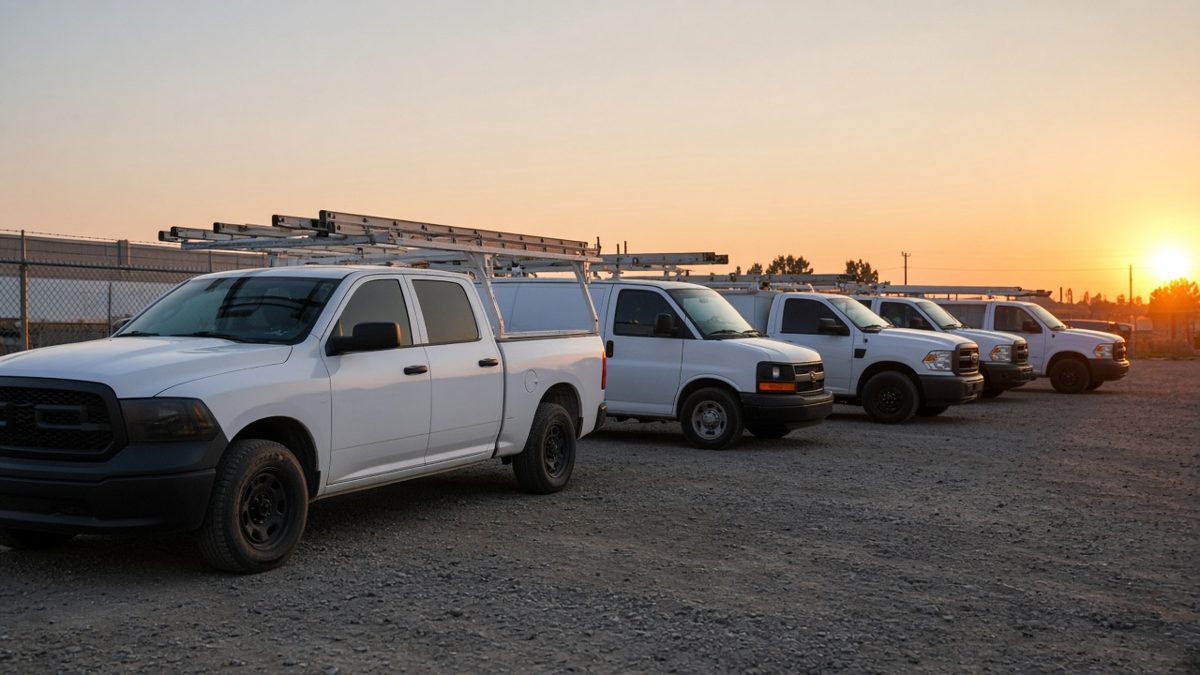
A pickup truck hauling tools to a job site, a van delivering flowers, and a sedan used to visit clients may look like ordinary vehicles, but in the eyes of an insurer they are often business vehicles. Commercial auto insurance covers vehicles owned or used by a business and protects the company against liability when an employee causes a crash while working. Relying on a personal auto policy for business driving is one of the most common and expensive insurance mistakes small business owners make.
When personal auto coverage stops working
Personal auto policies are designed for commuting and personal errands. Most contain exclusions or limitations for vehicles used to carry goods or people for a fee, vehicles titled to a business, and certain types of trucks. Insurers ask how a vehicle is used when you apply, and misstating business use can lead to a denied claim or cancellation.
Situations that commonly call for commercial auto coverage include:
- The vehicle is titled or leased in the name of an LLC or corporation.
- Employees drive the vehicle.
- You carry tools, equipment, or materials as part of your work.
- You tow trailers or haul goods for customers.
- The vehicle has signage, ladder racks, or upfitting.
- The vehicle weighs more than personal policies allow.
- You transport people for a fee.
Rideshare and delivery app drivers occupy a middle ground. Transportation network companies carry insurance that applies during certain periods of app use, and many states require it. Personal insurers in many states sell rideshare endorsements that fill the gap between turning the app on and accepting a ride. Read the app’s coverage summary and your policy carefully.
Core commercial auto coverages
Liability
Liability coverage pays for injuries and property damage your business vehicles cause to others. Commercial policies often use a combined single limit, such as $1 million per accident. Contracts with general contractors, property managers, and government agencies frequently require specific limits.
Physical damage
Collision and comprehensive coverage pay to repair or replace your vehicles. Lenders and lessors require them while you finance.
Medical payments, PIP, and uninsured motorist
Requirements vary by state. No-fault states require personal injury protection on commercial vehicles as well, and many states require uninsured motorist coverage or a written rejection.
Covered auto symbols
Commercial policies use numbered symbols to define which vehicles are covered. Symbol 1, “any auto,” is the broadest; other symbols cover only owned autos, only scheduled autos, hired autos, or non-owned autos. Understanding the symbols on your policy tells you whether a newly purchased truck or an employee’s personal car is covered.
Hired and non-owned auto coverage
Many businesses that do not own vehicles still face auto liability. If an employee drives their own car to the bank or to a client meeting and causes a crash, the injured party may sue the business. Hired and non-owned auto (HNOA) liability covers the company in that situation, and it also applies to rented vehicles. HNOA does not cover damage to the employee’s car, and the employee’s personal policy is usually primary. HNOA can often be added to a business owner’s policy or general liability program at modest cost.
Federal and state requirements for motor carriers
Businesses that operate commercial motor vehicles in interstate commerce may be regulated by the Federal Motor Carrier Safety Administration (FMCSA). Federal rules set minimum financial responsibility levels for for-hire carriers, starting at $750,000 for general freight and rising for hazardous materials and passenger carriers. For-hire carriers must have their insurer file proof of coverage with FMCSA. Carriers may also need a USDOT number and, for many for-hire operations, operating authority. Intrastate carriers face state rules that vary.
Even private contractors who haul their own equipment across state lines can fall under FMCSA rules once vehicle weight crosses certain thresholds, such as a gross vehicle weight rating over 10,000 pounds. Check FMCSA’s guidance or your state DOT before you assume your trucks are exempt.
Managing driver risk
Driver selection drives commercial auto pricing. Insurers review motor vehicle records for every listed driver, and a single driver with recent violations can raise premiums or make a risk ineligible. Practical controls include:
- Written driver policies. Set standards for who may drive company vehicles, including license history and age.
- Regular MVR checks. Review driving records annually with the driver’s consent.
- Cell phone rules. Prohibit handheld phone use while driving. Federal rules already ban handheld phone use for commercial motor vehicle drivers.
- Telematics. Fleet tracking can monitor speeding and harsh braking and support coaching. Some insurers offer discounts for telematics data.
- Maintenance logs. Document inspections and repairs.
- Dash cameras. Forward-facing cameras can help establish fault after a crash.
What drives premiums
Commercial auto has been one of the most challenging lines for insurers, with rising claim severity from medical costs and large jury verdicts in some jurisdictions. Premiums depend on vehicle types and weights, radius of operation, cargo, garaging location, driver records, claims history, and limits. Long-haul trucking tends to cost more than local service vehicles.
To control costs, consider higher physical damage deductibles, pay-in-full discounts, bundling with general liability and workers’ compensation through one insurer or program, and removing vehicles from the schedule when sold. Keeping a clean loss record over several years is the most powerful lever.
After a crash in a business vehicle
- Make sure everyone is safe and call police.
- Exchange information, but avoid admitting fault.
- Photograph the scene and vehicles.
- Report the claim promptly to your insurer and notify any client whose contract requires notice.
- Preserve dash camera footage and telematics data.
- If the driver was injured, report the injury for workers’ compensation purposes.
Shopping for commercial auto insurance
Gather a vehicle schedule with VINs, garaging addresses, a driver list with license numbers, your loss runs from prior insurers for the past three to five years, and a description of operations, including radius and cargo. Agents who specialize in contractors or transportation can access markets that standard carriers may not offer.
Coordinating commercial auto with other policies
Commercial auto is only one piece of a business insurance program, and gaps often appear where policies meet. General liability policies usually exclude injuries arising from the use of autos, so a crash involving a work truck is an auto claim, not a GL claim. However, injuries caused by mobile equipment such as forklifts, skid steers, or certain cranes may fall under general liability instead. Tools and equipment stored in a truck are usually not covered by the auto policy; they need inland marine or contractor’s equipment coverage. And when an employee is hurt while driving for work, their injuries are generally a workers’ compensation matter, while injuries to the other driver fall under the auto liability policy.
A commercial umbrella can sit above auto, general liability, and employer’s liability, adding limits that large clients may require. Confirm that your umbrella lists the commercial auto policy as underlying insurance.
Leased, rented, and borrowed vehicles
If you lease vehicles, the lease contract will specify required limits and may require you to name the lessor as an additional insured and loss payee. Ask about gap coverage, which pays the difference between a vehicle’s value and the remaining lease balance after a total loss. When renting trucks short term, HNOA covers liability, but physical damage to the rental may require hired auto physical damage coverage or the rental company’s damage waiver. Borrowing a vehicle from another business for a job is common in the trades, but it should be documented in writing with each party’s insurance obligations clear.
Annual review checklist
- Reconcile the vehicle schedule with your actual fleet.
- Update the driver list and pull fresh MVRs.
- Review contract requirements for new clients.
- Compare limits with your current revenue and assets.
- Ask your agent about new safety program discounts.
Related reading: How State Minimum Auto Insurance Requirements Actually Work in the US.
Frequently Asked Questions
Can I put my business truck on my personal policy?
Some insurers allow light business use on a personal policy, but titled-to-business vehicles, employee drivers, and heavy trucks usually require commercial coverage. Ask your insurer directly and get the answer in writing.
Does my employee’s personal insurance cover them on a work errand?
Their personal policy is usually primary for their own vehicle, but limits may be low. HNOA coverage protects the business if the claim exceeds their limits or the business is sued.
Is commercial auto more expensive than personal?
Often yes, because limits are higher and business use carries more exposure, but the coverage is designed for that exposure.
This article is for general informational purposes only and is not legal, medical, tax, or financial advice. Rules vary by state and change over time; confirm details with the relevant agency or a licensed professional.