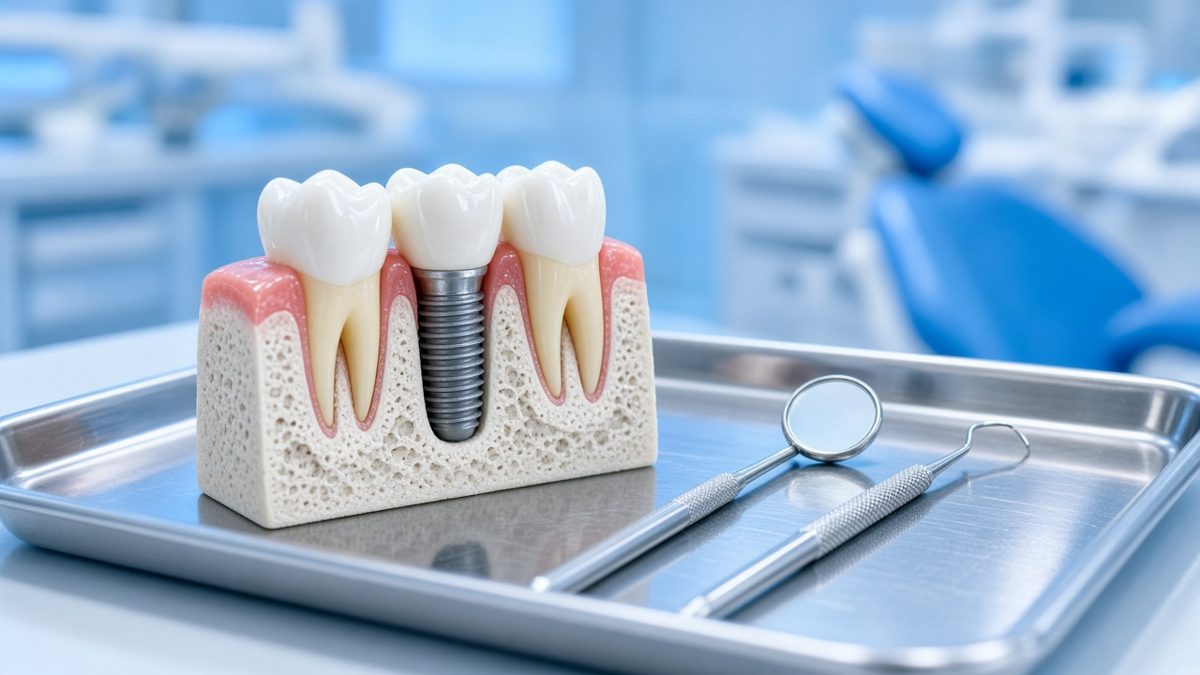
A dental implant replaces a missing tooth root with a small titanium or zirconia post placed in the jawbone, topped with a crown. Implants can look and function much like natural teeth and, with proper care, often last many years. They are also among the most expensive dental treatments, and dental insurance was not designed with them in mind. Understanding dental implants cost and coverage helps you plan treatment and avoid surprises.
What goes into the cost of an implant
A single-tooth implant involves several stages, each of which may be billed separately:
- Consultation and imaging. An exam and X-rays, often a cone beam CT scan, to evaluate bone and anatomy.
- Extraction, if the damaged tooth is still present.
- Bone grafting or sinus lift, if the jaw lacks enough bone to support an implant.
- Implant placement surgery, placing the post in the bone.
- Healing period, commonly several months for the implant to fuse with bone, called osseointegration.
- Abutment, the connector piece attached to the implant.
- Crown, the visible tooth, custom made.
- Sedation or anesthesia, if used.
Because of these components, the total for a single implant with crown commonly runs several thousand dollars, with large variation by region, provider type, materials, and the need for grafting. Full-arch solutions that replace all teeth in a jaw with a fixed bridge supported by several implants cost substantially more. Ask for a written treatment plan with each step and its fee.
Does dental insurance cover implants?
Coverage has improved, but it remains limited.
Annual maximums
The biggest constraint is the annual maximum, the most a dental plan pays per year. Many plans still have annual maximums of $1,000 to $2,000, figures that have changed little in decades. An implant can exceed that amount on its own.
Coverage categories
Dental plans typically classify services as preventive, basic, and major, with common coinsurance of around 100, 80, and 50 percent respectively. Implants, when covered, usually fall under major services. Some plans cover the crown but not the implant post, or vice versa.
Waiting periods and missing tooth clauses
New plans often impose waiting periods, commonly 6 to 12 months, before major services are covered. A missing tooth clause excludes replacement of teeth lost before coverage began. Read the policy carefully before buying a plan specifically for an implant.
Alternate benefit provisions
Some plans pay only what they would have paid for a less expensive alternative, such as a bridge or partial denture, and you pay the difference if you choose an implant.
Medical insurance
Medical insurance rarely covers implants, but it may cover related care in specific circumstances, such as tooth loss from an accident, jaw reconstruction after cancer, or congenital conditions. Ask your dentist to check whether a medical claim is appropriate.
Medicare and dental implants
Original Medicare generally does not cover routine dental care, including implants. Medicare covers dental services only in limited situations tied to other covered medical care, such as dental exams before an organ transplant or certain cancer treatments, and CMS has gradually expanded these situations in recent years.
Many Medicare Advantage plans include supplemental dental benefits. Some cover comprehensive services, including implants, but often with annual limits, network requirements, and coinsurance. Compare the plan’s dental benefit details, not just whether it offers dental.
Medicaid dental coverage for adults varies by state. Most states offer some adult dental benefits, but implants are rarely covered except in limited circumstances.
Ways to reduce what you pay
1. Split treatment across benefit years
Because implant treatment spans months, your dentist may be able to schedule stages so that part falls in one plan year and part in the next, using two annual maximums.
2. Use pre-tax accounts
Health savings accounts, flexible spending accounts, and health reimbursement arrangements can pay for dental implants, which are qualified medical expenses. With an FSA, you can elect a higher amount during open enrollment if you plan treatment in the coming year.
3. Consider dental schools
Dental schools accredited by the Commission on Dental Accreditation often provide implant treatment at reduced fees, with work performed by students or residents under faculty supervision. Treatment may take longer and require more appointments.
4. Compare providers
General dentists, periodontists, and oral surgeons may place implants, and prosthodontists or general dentists may restore them. Fees vary. Ask about each provider’s training and experience, how many implants they place, and their complication policies.
5. Ask about payment plans
Many dental practices offer in-house payment plans. Third-party medical credit cards may offer promotional interest-free periods, but deferred interest can be charged on the entire balance if it is not paid in full by the deadline.
6. Dental discount plans
Discount plans, which are not insurance, offer reduced fees at participating dentists for an annual membership fee. They usually have no waiting periods or annual maximums, which can make them useful for implant treatment. Verify the actual discount for implants with participating dentists.
7. Be cautious about dental tourism
Some patients travel abroad for lower-cost implants. Consider the difficulty of follow-up care and handling complications at home, differences in standards and materials, and travel costs.
Implants vs bridges vs dentures
- Implants preserve adjacent teeth and help maintain jawbone but are the most expensive upfront and require surgery.
- Fixed bridges use adjacent teeth as anchors, which requires reshaping those teeth. They are often less expensive and more likely to be covered by insurance, but may need replacement over time.
- Removable partial or full dentures are the least expensive and most often covered but can be less stable and comfortable. Implant-supported overdentures, which snap onto two or more implants, are a middle ground for people missing all teeth in a jaw.
Your dentist can explain which options suit your oral health, bone, and budget.
Questions to ask before treatment
- What is the total cost for each stage, including the crown?
- Will I need a bone graft or sinus lift?
- What implant system and crown material will you use?
- How long is the healing time, and will I have a temporary tooth?
- What happens if the implant fails?
- Will you submit a pre-treatment estimate to my insurance?
A pre-treatment estimate, sometimes called a predetermination, lets your insurer state in advance what it will pay, though it is not always a guarantee.
Caring for an implant
Implants do not decay, but the surrounding gum and bone can develop inflammation, called peri-implantitis, which can lead to implant failure. Brush and floss daily, use tools your hygienist recommends, attend regular cleanings, and avoid smoking, which increases the risk of complications. Grinding or clenching may require a night guard.
Who is a good candidate for implants?
Most adults with good general health and enough jawbone can receive implants, but some factors raise the risk of complications. Uncontrolled diabetes, heavy smoking, untreated gum disease, radiation therapy to the jaw, and certain medications that affect bone, such as some drugs used for osteoporosis or cancer, can affect healing. This does not always rule out implants, but your dentist may recommend managing these conditions first, using a different approach, or consulting your physician. Children and teenagers whose jaws are still growing are generally not candidates for implants. Be honest about your medical history and medications during the consultation so your provider can plan safely.
Reading a treatment plan
A good written treatment plan lists each procedure with its American Dental Association CDT code, the fee, the estimated insurance payment, and your estimated share. Codes help you compare quotes between practices and check what your insurer will pay. If one quote is much lower, ask whether it includes the abutment, crown, imaging, and follow-up visits, since some quotes cover only the surgical placement of the post.
Related reading: Medicaid Eligibility in 2026: Income Limits, Expansion States, and How to Apply.
Frequently Asked Questions
Are dental implants tax deductible?
They can count toward the medical expense deduction if you itemize and your total unreimbursed medical expenses exceed 7.5 percent of adjusted gross income.
Can I get dental insurance that covers implants immediately?
Some plans waive waiting periods for people with prior continuous coverage, but most impose them for major services. Compare policies carefully.
How long do dental implants last?
The implant post can last many years or decades with good care, while crowns may need replacement after a number of years due to wear.
This article is for general informational purposes only and is not legal, medical, tax, or financial advice. Rules vary by state and change over time; confirm details with the relevant agency or a licensed professional.