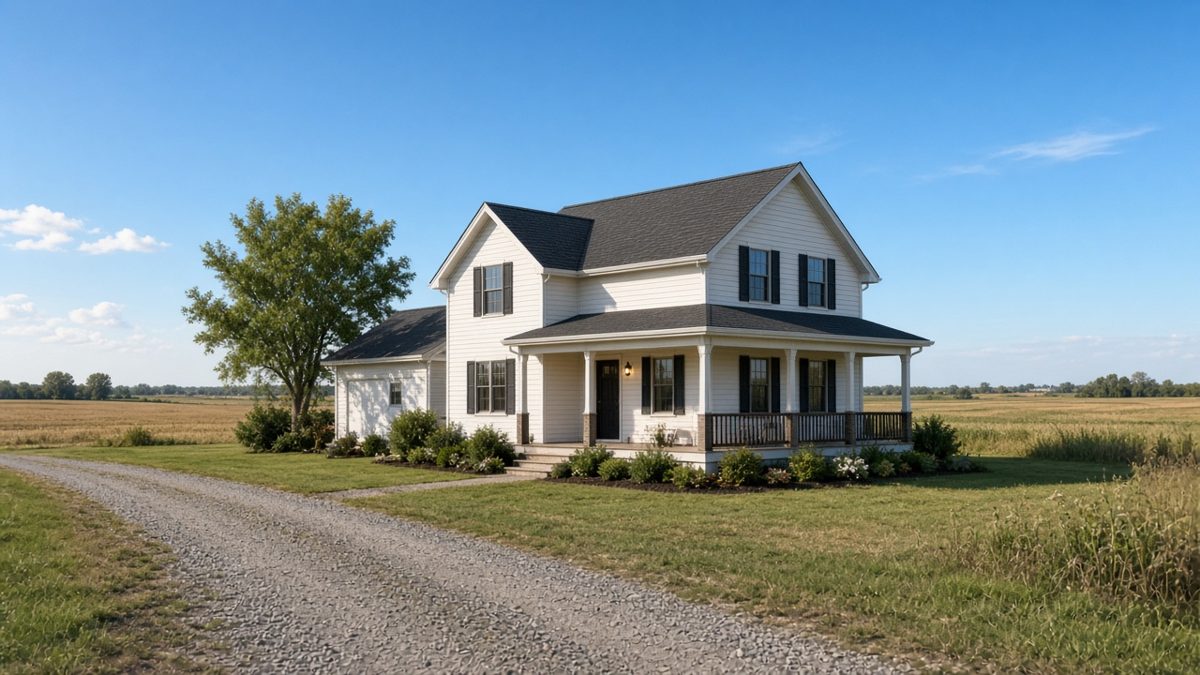
Many buyers assume a zero-down mortgage is available only to veterans. The U.S. Department of Agriculture (USDA) also backs home loans with no down payment requirement for eligible buyers in rural and some suburban communities. These loans are designed to help low- and moderate-income households buy modest homes outside major cities. This guide explains USDA loan requirements, how to check whether a property and your income qualify, what the loans cost, and how to apply.
What Is a USDA Home Loan?
USDA home loans come from the USDA Rural Development agency under the Single Family Housing programs. There are two main types for buying a home:
- Section 502 Guaranteed Loans: made by approved private lenders and guaranteed by USDA. This is the most common USDA loan and is aimed at low- to moderate-income buyers.
- Section 502 Direct Loans: made directly by USDA to low- and very-low-income applicants. Direct loans may include payment assistance that can reduce the effective interest rate substantially for qualifying borrowers.
Both programs allow 100% financing for eligible buyers, meaning no down payment is required.
Property Eligibility: Where You Can Buy
USDA loans are limited to eligible rural areas, but the definition is broader than many people expect. Many small towns and some outer suburbs of metropolitan areas qualify. You can check a specific address using the USDA eligibility map on the USDA Rural Development eligibility website. Eligibility maps are updated periodically, often after census data changes, so confirm an address before you make an offer.
The home must be your primary residence. Generally, USDA loans are intended for modest, single-family homes. Income-producing properties such as working farms are not eligible, and in-ground swimming pools have historically been restricted or discouraged in some program rules. Condominiums and manufactured homes may qualify if they meet program standards.
Income Limits
USDA loans have household income limits, which differ by program and county:
| Program | Typical income limit |
|---|---|
| Guaranteed loan | Up to 115% of the area median income |
| Direct loan | Low income (generally up to 80% of area median) or very low income (generally up to 50%) |
Importantly, USDA counts the income of all adult household members, not just those on the loan, when determining eligibility, although certain deductions, such as for dependents, child care, and elderly household members, can reduce countable income. Look up current limits for your county using the USDA income eligibility tool.
Credit Requirements
USDA does not set a hard minimum credit score for guaranteed loans, but lenders using USDA’s Guaranteed Underwriting System (GUS) commonly look for a score of at least 640 for streamlined processing. Borrowers below that may still qualify through manual underwriting, which requires a closer review of credit history, payment patterns, and compensating factors. Recent bankruptcies, foreclosures, or collection accounts can affect eligibility, with waiting periods that typically range from about one to three years depending on the event.
Applicants without a traditional credit history may be able to use nontraditional credit, such as rent, utility, and insurance payment records.
Debt-to-Income Guidelines
USDA guidelines generally reference:
- Front-end ratio (housing costs): about 29% of gross monthly income
- Back-end ratio (all debts): about 41% of gross monthly income
Applicants with strong credit, stable employment, or cash reserves may be approved with higher ratios through GUS.
Employment and Income Stability
Lenders typically verify about two years of employment history and expect stable income that is likely to continue. Seasonal, part-time, and self-employment income can be counted if properly documented over time.
What Does a USDA Loan Cost?
Guaranteed USDA loans do not require private mortgage insurance, but they carry guarantee fees:
- Upfront guarantee fee: 1% of the loan amount, which can be financed into the loan
- Annual fee: 0.35% of the average outstanding balance, paid monthly
These fees are often lower than FHA mortgage insurance. Unlike conventional PMI, the annual USDA fee lasts for the life of the loan. Interest rates on USDA guaranteed loans are set by lenders and are often competitive with other government-backed loans.
Closing costs still apply, but USDA allows sellers to contribute toward them, and in some cases closing costs can be financed if the appraisal exceeds the purchase price.
USDA vs FHA vs Conventional
| Feature | USDA guaranteed | FHA | Conventional |
|---|---|---|---|
| Minimum down payment | 0% | 3.5% | 3% for some programs |
| Income limits | Yes | No | Some low-down-payment programs |
| Location limits | Eligible rural areas | No | No |
| Mortgage insurance or fee | 1% upfront, 0.35% annual | 1.75% upfront plus annual MIP | PMI below 20% down; removable |
| Primary residence only | Yes | Yes | No |
For buyers who meet both income and location rules, USDA can be one of the lowest-cost ways to buy with little cash.
The USDA Direct Loan Program
Direct loans are processed by local USDA Rural Development offices rather than private lenders. They are intended for applicants who lack decent, safe housing and cannot obtain credit elsewhere. Features include:
- Loan terms that may extend to 33 years, or 38 years for very-low-income applicants who qualify
- Payment assistance, which can reduce the effective interest rate to as low as 1% for qualifying borrowers
- Limits on home size and value that vary by area
Payment assistance may be subject to recapture when the home is sold or no longer occupied. Funding for direct loans depends on annual appropriations, and processing times can be longer than for guaranteed loans.
How to Apply for a USDA Guaranteed Loan
- Check the property address on the USDA eligibility map.
- Confirm your household income falls within the county limit.
- Review your credit reports and address any errors.
- Find a USDA-approved lender; many banks, credit unions, and mortgage companies participate.
- Get preapproved and shop for homes in eligible areas.
- Make an offer and complete the appraisal and inspection.
- The lender submits your file to USDA for final guarantee approval, which adds a step compared with FHA or conventional loans.
- Close on your home.
Tips for a Smoother USDA Purchase
- Work with a real estate agent who has closed USDA loans before.
- Build extra time into your contract for USDA’s review.
- Gather documentation for every adult in your household’s income.
- Keep cash in reserve even though no down payment is required.
USDA Refinancing Options
Existing USDA borrowers may be able to refinance through USDA’s streamlined refinance programs, which can reduce documentation and may not require a new appraisal in some cases. Generally, these programs require on-time payment history and must lower your payment. USDA does not offer cash-out refinancing, so homeowners who want to tap equity typically refinance into another loan type.
Common Misunderstandings
- “USDA loans are only for farmers.” In fact, most USDA borrowers are not farmers, and the program focuses on housing, not agriculture.
- “Rural means remote.” Many eligible areas are within commuting distance of cities.
- “You must be a first-time buyer.” Repeat buyers can qualify, though you generally cannot own another adequate home nearby.
Frequently Asked Questions
Is there a maximum loan amount for USDA guaranteed loans?
There is no set national loan limit for guaranteed loans. Your loan amount is limited by your income, debts, and the property’s appraised value. Direct loans have area loan limits.
Can I buy a home in the suburbs with a USDA loan?
Possibly. Some suburban areas outside large cities qualify. Check the USDA eligibility map for a specific address.
Do USDA loans require mortgage insurance?
They do not require PMI, but guaranteed loans have a 1% upfront fee and a 0.35% annual fee that function similarly.
How long does a USDA loan take to close?
Many guaranteed loans close in roughly 30 to 60 days, depending on lender workload and USDA review times. Direct loans can take longer.
Can I use a USDA loan for a second home or investment property?
No. USDA loans are only for primary residences.
This article is for general informational purposes only and is not legal, medical, tax, or financial advice. Rules vary by state and change over time; confirm details with the relevant agency or a licensed professional.