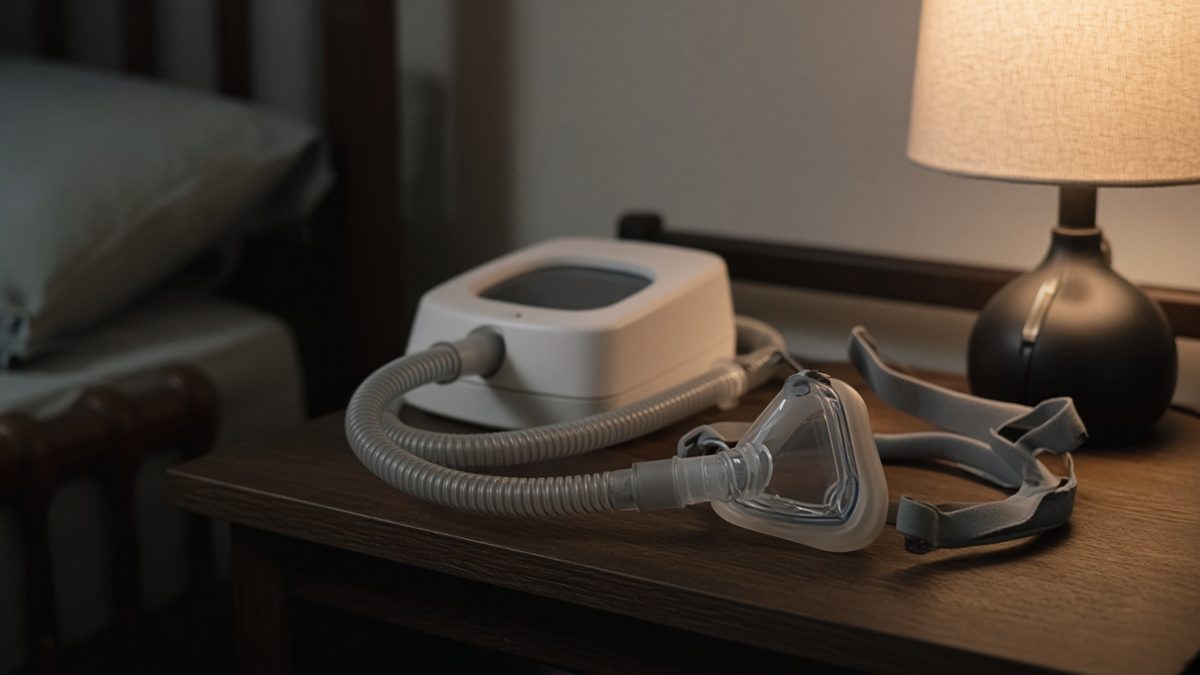
Obstructive sleep apnea (OSA) occurs when the airway repeatedly narrows or closes during sleep, causing pauses in breathing, drops in oxygen, and fragmented sleep. Untreated OSA has been linked to daytime sleepiness, high blood pressure, heart disease, stroke, and drowsy driving crashes. Continuous positive airway pressure, or CPAP, is the most common treatment, and most health plans cover it. But CPAP insurance coverage comes with rules about testing, usage, and supplies that surprise many patients. This guide explains how it works.
Getting diagnosed
Insurers require a diagnosis from a sleep study before covering CPAP.
Home sleep apnea testing
For many adults with suspected moderate to severe OSA and no major other health problems, a home sleep apnea test is the first step. You wear a small device overnight that records breathing, airflow, and oxygen levels. Home tests are typically less expensive than lab studies and are often preferred by insurers.
In-lab polysomnography
An overnight study in a sleep lab records brain waves, breathing, heart rhythm, oxygen, and movement. It is used when home testing is inappropriate, such as for people with significant heart or lung disease, suspected other sleep disorders, or inconclusive home results. Some patients have a split-night study, in which CPAP is started partway through the night.
The apnea-hypopnea index
Sleep studies report the apnea-hypopnea index (AHI), the average number of breathing pauses and reductions per hour. Medicare, for example, covers CPAP for adults with an AHI of 15 or more, or an AHI of 5 to 14 with documented symptoms or conditions such as excessive daytime sleepiness, hypertension, heart disease, or history of stroke. Private plans use similar criteria.
How Medicare covers CPAP
Under Original Medicare, CPAP devices are covered under Part B as durable medical equipment:
- Initial 12-week trial. Medicare covers a three-month trial of CPAP therapy.
- Compliance requirement. To continue coverage beyond the trial, you must use the device at least four hours per night on 70 percent of nights during a consecutive 30-day period within the first three months, and have a face-to-face follow-up with your treating clinician documenting that the therapy is helping.
- Rental. Medicare typically pays for CPAP as a rental for 13 months, after which you own the device. You pay 20 percent coinsurance on each monthly rental payment after the Part B deductible.
- Suppliers. You must use a Medicare-enrolled supplier. Suppliers that accept assignment cannot charge more than the Medicare-approved amount.
If you do not meet the compliance requirement, Medicare may stop paying, and you may need to repeat parts of the evaluation to requalify.
Private insurance coverage
Commercial plans commonly follow similar rules: prior authorization, documented diagnosis, a rent-to-own period, and compliance monitoring. Modern CPAP machines transmit usage data to the supplier and insurer, sometimes wirelessly, so the plan can verify use. Coverage is subject to your deductible and coinsurance, and the rental structure means payments may count toward your deductible over many months.
If you have a high-deductible plan, ask whether buying the device outright, or paying cash at a lower price, would cost less than the rental payments. Cash purchases may not count toward your deductible, though.
Supplies and replacement schedules
Masks, cushions, tubing, filters, and humidifier water chambers wear out and are covered on schedules. Medicare’s allowable replacement frequencies include, for example, cushions or nasal pillows as often as twice a month, full face masks every three months, tubing every three months, and disposable filters twice a month. Private plans set their own schedules. You must request replacements; suppliers will not always send them automatically, and some auto-ship programs ship more than you need, so watch your statements.
Getting comfortable with CPAP
Many people struggle at first. Common solutions include:
- Trying different masks. Nasal pillows, nasal masks, and full face masks each suit different people. Ask the supplier about mask exchange policies within the first 30 days.
- Using heated humidification to reduce dryness and congestion.
- Ramp settings that start at low pressure and increase gradually.
- Auto-adjusting CPAP (APAP) machines that vary pressure through the night.
- Practicing while awake to get used to the sensation.
- Contacting your sleep clinician early rather than giving up.
Meeting the compliance threshold early protects your coverage.
Alternatives to CPAP
Oral appliance therapy
Mandibular advancement devices, custom made by a dentist trained in sleep medicine, hold the lower jaw forward to keep the airway open. They are an option for mild to moderate OSA or for people who cannot tolerate CPAP. Medicare and many private plans cover custom oral appliances under medical benefits when criteria are met, rather than under dental insurance.
Hypoglossal nerve stimulation
An implanted device stimulates the nerve that controls tongue movement, keeping the airway open during sleep. It is FDA-approved for certain adults with moderate to severe OSA who cannot use CPAP and meet criteria such as body mass index limits and airway anatomy. Coverage generally requires documented CPAP failure and a sleep endoscopy.
Lifestyle and other treatments
Weight loss can reduce OSA severity in people with overweight or obesity. In 2024, the FDA approved tirzepatide for moderate to severe OSA in adults with obesity, the first medication approved for OSA, and Medicare Part D plans may cover it for that indication. Positional therapy, avoiding alcohol before bed, and treating nasal congestion may help some people. Surgery on the nose, throat, or jaw is an option in selected cases.
Traveling with CPAP
CPAP machines are medical devices and generally do not count toward carry-on limits on US airlines, though you should check your airline’s policy. The Transportation Security Administration screens CPAP machines separately. Many people use travel-size machines, which insurance usually does not cover in addition to a primary device.
Recalls and device safety
In 2021, a major manufacturer recalled millions of CPAP, BiPAP, and ventilator devices because of concerns about degrading sound-abatement foam, and later entered into a consent decree with federal authorities. If you use an older device, check the FDA’s recall database and talk with your clinician before stopping therapy. Device recalls are a reminder to register your machine with the manufacturer.
Costs to expect
Your total cost depends on your plan’s deductible and coinsurance, the supplier’s contracted rates, and how many months of rental remain before you own the device. Under Original Medicare, you owe 20 percent of each monthly rental after the Part B deductible, plus 20 percent of covered supplies, and a Medigap policy can pick up much of that coinsurance. Medicare Advantage plans set their own copays for durable medical equipment and often require you to use a network supplier. For people with commercial insurance, the device rental may count toward an annual deductible, so it can be practical to start treatment early in the plan year when deductible spending will continue to accumulate for other care.
Sleep studies have their own costs. Home tests generally cost much less than in-lab studies, and your share depends on whether the study is billed as an outpatient hospital service or through an independent provider. Ask for an estimate before scheduling.
Sleep apnea and commercial drivers
Commercial drivers with untreated sleep apnea may face medical certification issues under federal motor carrier rules, since the medical examiner evaluates conditions that could cause sleepiness. Drivers diagnosed with OSA are often asked to show CPAP compliance data. Keeping your usage records protects both your health and your license.
Children and sleep apnea
Sleep apnea also affects children, often because of enlarged tonsils and adenoids. Treatment frequently involves surgery rather than CPAP, and pediatric coverage rules differ. Talk with a pediatrician if a child snores loudly, pauses breathing during sleep, or has daytime behavior or attention problems.
Related reading: Medicaid Eligibility in 2026: Income Limits, Expansion States, and How to Apply.
Frequently Asked Questions
What happens if I fail Medicare’s compliance requirement?
Medicare may stop covering the device. You may need a new evaluation and possibly a repeat sleep study to requalify.
Can I buy a CPAP without a prescription?
No. CPAP machines require a prescription in the United States.
Will insurance cover a new machine after five years?
Medicare generally covers replacement after the reasonable useful lifetime, usually five years, if the device is worn out and you still need it. Private plans have similar rules.
This article is for general informational purposes only and is not legal, medical, tax, or financial advice. Rules vary by state and change over time; confirm details with the relevant agency or a licensed professional.