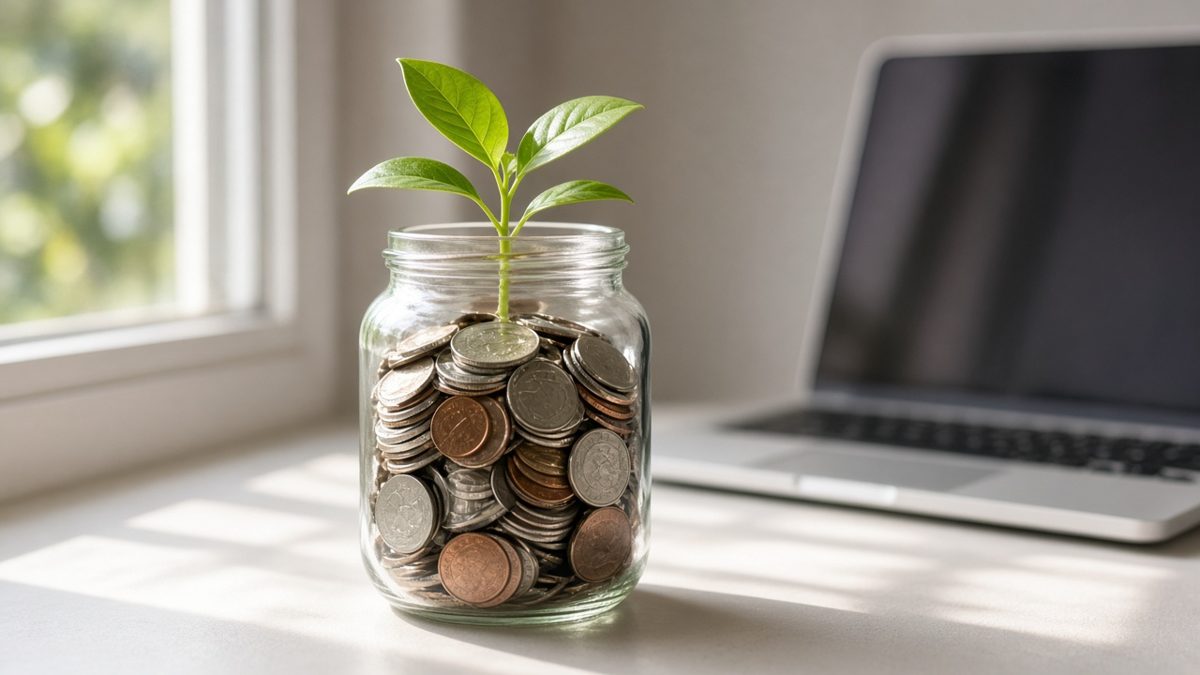
Cash you keep for emergencies or short-term goals should be safe and easy to reach, but it does not have to sit idle. A high-yield savings account pays a higher rate than many traditional savings accounts at large brick-and-mortar banks, often by a wide margin, while keeping your money federally insured. Understanding how these accounts work, how rates change, and what to compare will help you pick an account that fits your goals.
What is a high-yield savings account?
A high-yield savings account is a deposit account that pays a competitive annual percentage yield (APY). They are most commonly offered by online banks and some credit unions, which can pass savings from lower overhead on to customers. Many large national banks also offer high-yield options, though their standard savings accounts often pay very little.
Like any savings account, a high-yield account:
- Holds cash you can withdraw or transfer
- Pays interest, usually compounded daily or monthly and credited monthly
- Is generally protected by federal deposit insurance when held at an insured institution
APY vs interest rate
You will often see two numbers. The interest rate is the base rate paid on your balance. The APY reflects the effect of compounding over a year. Because interest earns interest, APY is usually slightly higher than the stated rate. When comparing accounts, use APY, since federal rules under the Truth in Savings Act require banks to disclose it in a standard way.
Here is a simple illustration of how APY affects earnings over one year on a constant balance, ignoring taxes:
| Balance | APY 0.50% | APY 4.00% |
|---|---|---|
| $5,000 | about $25 | about $200 |
| $10,000 | about $50 | about $400 |
| $25,000 | about $125 | about $1,000 |
These figures are examples, not current rates. Rates on savings accounts are variable and generally move with the Federal Reserve’s policy rate, so the APY you get at opening can rise or fall later.
Safety: FDIC insurance limit and NCUA coverage
Deposits at FDIC-insured banks are protected up to $250,000 per depositor, per insured bank, for each account ownership category. Credit union deposits receive the same level of protection through the National Credit Union Administration (NCUA). Ownership categories include single accounts, joint accounts, certain retirement accounts, and trust accounts, so a household can have more than $250,000 insured at one bank if it is held in different categories.
Before opening an account, verify insurance using the FDIC’s BankFind tool or the NCUA’s credit union locator. Be careful with fintech apps: some are not banks themselves and hold deposits at partner banks. Insurance generally protects you if an insured bank fails, not if a non-bank fintech company fails, so read how the app holds your money.
What to compare
APY and rate history
A high introductory rate can fall quickly. Look at whether the bank has a history of keeping rates competitive, and check whether a promotional rate requires a minimum balance or applies only for a few months.
Fees and minimums
Many online bank savings accounts have no monthly maintenance fee and no minimum balance. Avoid accounts that charge fees unless you can easily meet the waiver requirements.
Balance tiers
Some accounts pay the top APY only on balances within a certain range. Make sure the advertised rate applies to the amount you plan to keep.
Access and transfers
Check how easily you can link an external checking account, how long transfers take, and whether there are daily transfer limits. Some banks limit the number of withdrawals per month, even though the Federal Reserve removed the six-per-month requirement from Regulation D in 2020. Many banks kept limits voluntarily.
Customer service and tools
Features such as savings buckets, automatic transfers, and a strong mobile app make it easier to save consistently.
High-yield savings vs other cash options
| Account | Liquidity | Rate type | Insured? |
|---|---|---|---|
| High-yield savings | High | Variable | Yes, FDIC/NCUA up to limits |
| Money market account | High, sometimes with checks | Variable | Yes, FDIC/NCUA up to limits |
| Certificate of deposit (CD) | Low until maturity; early withdrawal penalty | Fixed for the term | Yes, FDIC/NCUA up to limits |
| Money market fund | High, through a brokerage | Variable | No; not bank deposits |
| Treasury bills | Moderate; sell or hold to maturity | Fixed for the term | Backed by the US government |
A money market account is a bank deposit product and may offer check-writing. A money market fund is an investment held at a brokerage; it aims to keep a stable value but is not FDIC insured. Treasury bills can be attractive for larger balances, and their interest is exempt from state and local income tax.
Taxes on savings interest
Interest earned in a high-yield savings account is generally taxable as ordinary income at the federal level and in most states. If you earn $10 or more in interest from a bank in a year, you will typically receive Form 1099-INT, but you must report all taxable interest even if you do not receive a form. Your after-tax return depends on your tax bracket.
How to use a high-yield savings account well
Build your emergency fund
A common guideline is to keep three to six months of essential expenses in an emergency fund, with more if your income is irregular or you are the sole earner. A high-yield account is a natural home for this money because it stays liquid and insured.
Save for near-term goals
Money you need within the next few years, such as a home down payment, a car, or tuition, generally belongs in safe, liquid accounts rather than in the stock market, where values can fall right when you need them.
Automate deposits
Set a recurring transfer from checking on payday. Some employers allow you to split direct deposit so part of each paycheck goes directly to savings.
Use separate buckets
Many banks let you create sub-accounts or labeled goals. Seeing separate balances for “emergency,” “travel,” and “car repairs” can help you avoid dipping into the wrong fund.
How to open an account
- Compare APY, fees, minimums, and insurance status.
- Gather your Social Security number, a government ID, and your current bank account details.
- Apply online; approval is usually fast.
- Link your checking account, sometimes verified with small trial deposits.
- Make an initial deposit and set up automatic transfers.
Opening a savings account usually does not involve a hard credit inquiry, though some banks check ChexSystems, a consumer reporting agency for deposit accounts.
Mistakes that reduce your savings earnings
A high-yield account only helps if you use it well. Watch for these common missteps:
- Leaving cash in a low-rate account out of habit. Many people keep large balances in checking or a traditional savings account that pays a small fraction of competitive rates. Moving your savings can be done online in minutes.
- Chasing every promotional rate. Switching banks repeatedly for a slightly higher rate can create hassle and missed transfers. Focus on banks with consistently competitive rates rather than short-term teasers.
- Ignoring insurance limits. If your balances exceed $250,000 in a single ownership category at one bank, consider spreading funds across institutions or ownership categories.
- Forgetting about inflation and taxes. After taxes, your real return may be modest when inflation is high. A savings account is meant for safety and liquidity, not long-term growth.
- Mixing goals. Keep your emergency fund separate from vacation savings so you always know what is available for real emergencies.
Related reading: How to Improve Your Credit Score: A Practical Step-by-Step Plan.
Frequently Asked Questions
Are high-yield savings accounts safe?
Yes, when held at an FDIC-insured bank or NCUA-insured credit union, deposits are protected up to $250,000 per depositor, per institution, per ownership category.
Can the rate on my high-yield savings account change?
Yes. Savings rates are variable and can go up or down at any time, often following changes in the Federal Reserve’s benchmark rate. A CD is the option if you want a locked rate.
Is a high-yield savings account better than a CD?
It depends on your needs. Savings accounts offer flexibility, while CDs lock a rate for a set term but may charge a penalty for early withdrawal. Many savers use both.
How much should I keep in a high-yield savings account?
Many people keep their emergency fund plus savings for goals within a few years. Long-term retirement money is usually better invested in tax-advantaged accounts.
Do I pay taxes on interest?
Yes. Interest is generally taxable as ordinary income, and banks usually send Form 1099-INT if you earn $10 or more.
This article is for general informational purposes only and is not legal, medical, tax, or financial advice. Rules vary by state and change over time; confirm details with the relevant agency or a licensed professional.